
Author Archives: Paulette Morris, Teacher

The Fourth Noble Truth–The Noble Eightfold Path

“The Fourth Noble Truth is the path that leads to refraining from doing the things that cause us to suffer. This is the path we need the most.  The Buddha called it The Noble Eightfold Path. The Chinese translate it as the “Path of Eight Right Practices.” ~~ Thich Nhat Hanh
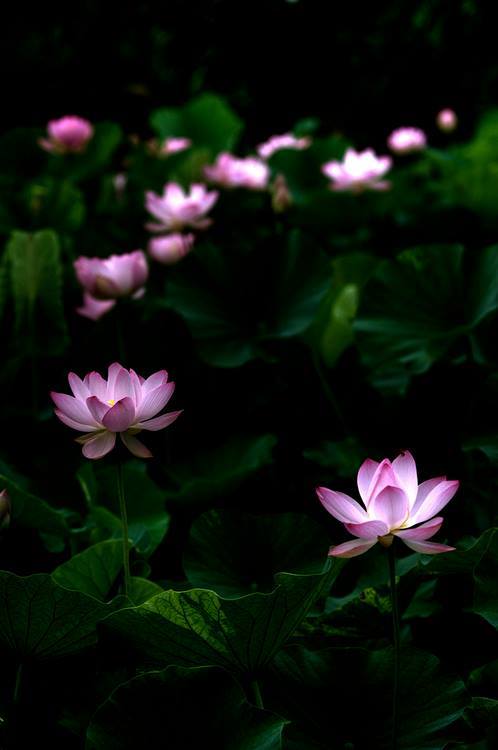
The Fourth Noble Truth is known as The Noble Eight-fold Path.  The Buddha gave us specific instructions on how to live and how to relate to ourselves and to the world in wise, moral, and mindful ways. The Buddha did not teach that we would have a mystical or magical experience. He said that if we live in this way we can become progressively more awake and aware right now – not in some future life, but in this very life. This path consists of a three-fold training: the wisdom training, ethics training, and concentration training. 

The first training is the wisdom training or prajna.  Prajna is our innate wisdom.  It is what urges us to listen more carefully, to look more deeply, to pause and reflect. It asks the question “Are you sure?” The wisdom training consists of Right View and Right Thinking. 

Next is the ethics training which consists of Right Speech, Right Action, and Right Livelihood. The Buddha taught that if we speak, act, and work in ethical ways, with loving-kindness, compassion and mindfulness our lives and the lives of those we come in contact with will be benefited.

Finally is the training in concentration or mindfulness: Right Effort, Right Mindfulness, and Right Concentration – our practice. Meditation practice is the foundation of an enlightened and awakened life. It informs all that we do, allowing us to be with life as it is with honesty and openness.

These three trainings support our way of life with clarity and simplicity.

Conscious realization

“[T]he conscious realization of the ending of Dukkha, of emptiness, and of the space of the mind are considered crucial elements of right practice.  Realizing the cessation of suffering is in some ways the most important of the aspects of working with the Four Noble Truths.  It’s the least tangible of them all, but it’s the one that contains the jewel, the seed of enlightenment.” ~~ Ajahn Amaro

Realizing the cessation of suffering is what is necessary and it is very illusive. In our sitting practice we can notice the arising of suffering. We can see its cause in our thinking. Then we are asked to realize this. “This is suffering. Oh, I see. This is suffering.” In so many circumstances the actual suffering will pass and the experience of discomfort will remain. We can identify the uncomfortable feeling, “My back is very painful,” and feel the pain in the back rather than have some story about the pain.  “I miss my father,” and then, as painful as grief can be, open my heart to miss my father.

The idea that we can avoid the difficult feelings in life by rejecting them is delusional. They are a part of life and come and go like everything else. Nothing will happen to us if we feel bad for a while, except that we feel bad for a while. Our heart ache will pass. If we pay attention to the pain in our bodies, we may discover that there is something that needs to be treated or done differently so that the pain will be relieved or pass. Knowing that suffering arises, that there is a cause for its arising and realizing its end is transformative.

Meditation

Again today, bring a “mindful and wise attention” to all of your experiences as you sit in meditation. Discover them in a new way. Each breath, each sensation, each feeling, each thought is new and different. Bring this sense of newness to each ksana.

The Third Noble Truth

“And this, monks, is the noble truth of the cessation of Dukkha: the remainder-less fading and cessation, renunciation, relinquishment, release, and letting go of craving.” ~~ The Buddha

The action required of the Third Noble Truth is that we let go. So simple and so difficult. Let go. Let go of craving for life to be other than it is. Let go of blaming, dissatisfaction and ignorance. Let go of the ideas of how life should be and live the life that is. There will be difficulties – great difficulties. We are asked to realize them rather than pretend that we should not have them and that there is somehow something wrong with us because we do. “This is suffering.” We allow ourselves to see that the difficulty becomes suffering when we reject the very idea and make ourselves and life wrong for its existence. Our struggle and resistance create the suffering. The very idea that we have done nothing to deserve this creates suffering. “There must be some mistake because I am a good person doing the best I can and now I’m being punished? What did I ever do to deserve this?” Sometimes we can look at our past behavior and see that what is happening is our karma ripening. Sometimes it is simply the way life is: the arising and the passing away of all phenomena. Jack Kornfield says that we bring a “mindful and wise attention” to all of our experiences and discover them in a new way. Chogyam Trungpa Rinpoche taught that we “lean in to the sharp points,” rather than pull away or reject them.

Meditation

As you sit today, see what you discover in your body and emotions. See what sensations are present as you release your thinking. Notice what emotions arise because of your thoughts and how long they remain after you release the thought. Pema Chodron tells us to approach all that happens in meditation with curiosity, compassion and loving-kindness; with an open heart. When our negativity arises we embrace even that with love and compassion. Nothing is rejected. Speak to yourself as you would your child or your dearest friend; speak to yourself as you would your loved one; “Oh my Darling, I know this is so painful. The feeling will pass if you feel it.” Give yourself comfort in the difficulty and encouragement to maintain your awareness.

Living in the Now

“Like a child standing in a beautiful park with his eyes shut tight, there’s no need to imagine trees, flowers, deer, birds, and sky; we merely need to open our eyes and realize what is already here, who we already are – as soon as we stop pretending we’re small or unholy.”

Bo Lozoff

When we stop living in the present moment and start living in a dream, we begin to generate our own suffering. Sometimes it is difficult to be here now, but when we understand that each moment passes and the next is created by our action for good or bad, then we can remain steadfast in our desire to create the best moment we can in reality, not in a fantasy. 

We all have dreams and plans for the future. We say to each other, “Let’s take a vacation this summer.” Then we begin to plan our vacation: car or plane; stay with friends or relatives or hotel; which ones and for how long; what will we do; who will we see. We finish our planning and then we come back to reality. We plan for the future, but live in the now. No matter what we’re planning; no matter how much it may change our lives; we make a plan and then live in today. When we are in the present we can see the Kleshas as they arise and allow them to pass away without entertaining them, thereby avoiding the creation of negative karma and further suffering.

Meditation

One of the most challenging things we do in life is to live it just as it is, without what I think of as “add-ons.”  “Add-on” are the things we make up about our life, or the current situation, or circumstance. Again, bring awareness to your thoughts in meditation. See where you change reality to fit what would be more comfortable – see where you “add-on.” Just be aware.