
Photo by Pixabay on Pexels.com
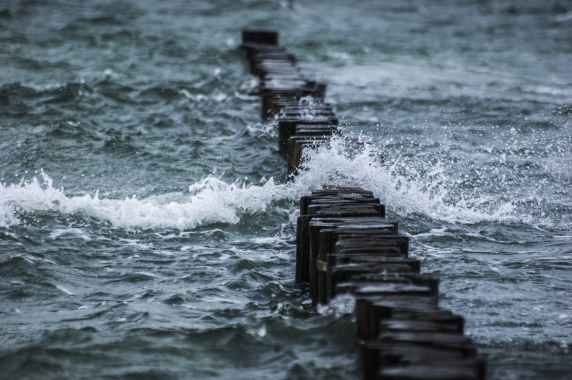
Sylvia Boorstein tells a story of being at a two-week mindfulness retreat on the coast of Hawaii in 1986. During a meditation period, the teacher Joseph Goldstein, rand the bell only after about 10 minutes to announce that there had been an earthquake near japan that had caused a tidal wave. The wave was headed toward Hawaii and since they were in such an isolated location, there was no time to evacuate. They would have to move to higher ground–the second floor of the facility.
She continues the story, “We were living in two-story bungalows on a beach ringed by thick jungle. The best we could do to “take high ground” was go upstairs. We collected matches, crackers, fruit, and flashlights and brought them to the second-floor room we were using as our communal meditation space. We filled the bathtubs with fresh water lest the water pipes burst. When we had finished preparing, we took our seats around the room. Most of us, facing our teacher, were also facing a wall-to-wall window that looked out across the sea to the flat horizon.
“Joseph Goldstein, told the story of a Zen master of long ago who was asked, “What would you do if the waters of the north and the south and the east and the west all rose around you?” The Zen master, Joseph continued, was reported to have said, “I would just sit.” Joseph said, “Let’s sit.”
“I closed my eyes and then opened them again, checking the horizon. I felt my heart pounding. Imagining what a wall of water moving toward us would look like, I was terrified. I closed my eyes and noticed that the room felt unusually quiet. I took a breath and felt it enough to have it catch my attention.
“Out of habit, I began to name my experience to myself: Breath in, breath out. Breath in, breath out. It’s very quiet. My hands are cold. My heart is pounding. I am trembling. I heard my mind saying, “I don’t want to drown,” and also, “Take a breath, Sylvia. Now another one.” I noticed my mind quieting down as I named breaths. “In. Out. In. Out.” I remember feeling surprised to find that my hands felt warmer and my heart had stopped pounding. “Maybe the tidal wave will happen,” I thought. “Maybe not. I don’t know.”
“Realizing that I didn’t know provided a moment of relief.”
 Sogyal Rinpoche wrote in The Tibetan Book of Living and Dying, “Self-grasping creates self-cherishing, which in turn creates an ingrained aversion to harm and suffering. However, harm and suffering have no objective existence, what gives them their existence and their power is only our aversion to them. When you understand this, you understand then that it is our aversion, in fact, that attracts to us every negativity and obstacle that can possibly happen to us, and fills our lives with nervous anxiety, expectation, and fear. Wear down that aversion by wearing down the self-grasping mind and its attachment to a nonexistent self, and you will wear down any hold on you that any obstacle or negativity can have.”

 OPEN HEART SANGHA