

Category Archives: Uncategorized

Living in the Now

“Like a child standing in a beautiful park with his eyes shut tight, there’s no need to imagine trees, flowers, deer, birds, and sky; we merely need to open our eyes and realize what is already here, who we already are – as soon as we stop pretending we’re small or unholy.”

Bo Lozoff

When we stop living in the present moment and start living in a dream, we begin to generate our own suffering. Sometimes it is difficult to be here now, but when we understand that each moment passes and the next is created by our action for good or bad, then we can remain steadfast in our desire to create the best moment we can in reality, not in a fantasy. 

We all have dreams and plans for the future. We say to each other, “Let’s take a vacation this summer.” Then we begin to plan our vacation: car or plane; stay with friends or relatives or hotel; which ones and for how long; what will we do; who will we see. We finish our planning and then we come back to reality. We plan for the future, but live in the now. No matter what we’re planning; no matter how much it may change our lives; we make a plan and then live in today. When we are in the present we can see the Kleshas as they arise and allow them to pass away without entertaining them, thereby avoiding the creation of negative karma and further suffering.

Meditation

One of the most challenging things we do in life is to live it just as it is, without what I think of as “add-ons.”  “Add-on” are the things we make up about our life, or the current situation, or circumstance. Again, bring awareness to your thoughts in meditation. See where you change reality to fit what would be more comfortable – see where you “add-on.” Just be aware.

Interbeing

“Most people find the concept of not-self somewhat difficult and may also feel very puzzled by it.  “Not-self” does not mean that entities as they are commonly perceived do not exist; it means that the concept of “self” has no absolutely independent existence.  The contents of all our experiences are phenomena resulting from a combination of various conditions.  Any labeling is just an artificial naming and delineation in the inseparable entirety of Buddha-nature… the happiness of one is the happiness of all; the sorrow of one is the sorrow of all… We have to see that the one is in the all and the all is in the one.” Thich Nhat Hanh

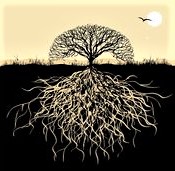
We are all connected. Whatever I think, say, or do affects you and everyone. We have no independent existence because everything is conditioned by everything else. Not only are my parents and siblings and nieces and nephews and children and grandchildren part of me, but I am a part of all human beings in Buddha-nature or basic goodness.  When I teach the dharma, it affects all the people I teach; and they in turn affect all the people they know with the dharma that they teach and those people affect all the people they know with their dharma. The insight of the interconnectedness of all beings can help us live in a way that embraces all beings as our brothers and sisters; not in a theoretical way, but in the most fundamental way we actually are all related. When I read or hear about the suffering of people around the world it affects me. My heart aches and reaches out to them. I say “May the virus recede and may all find food and shelter. May all be free from suffering. May all find peace.” I know from the aching of my heart, that the sorrow of one is the sorrow of all. When I see the joy of the people around me, I know from the joy that fills my own heart that the happiness of one is the happiness of all.

Meditation

Take a moment to think of the ways that you are connected to others; not just the members of your family, but to all beings. Do you have an experience of knowing that you are connected to other beings? Allow that question to be present in your meditation. See what arises.

The Second Noble Truth, the Cause of Suffering

“Anguish emerges from craving for life to be other than it is. It is the symptom of flight from birth and death, from the pulse of the present.”

Stephen Batchelor, Buddhism Without Beliefs

Mr. Batchelor’s explanation seems to sum it all up quite simply; we crave for “life to be other than it is.”  If we look at our lives we can see how this is the case.  We have the greatest discomfort when we are struggling against life as it is. We don’t want to accept that everything is impermanent. We feel alone and separate from everyone and everything.  We believe that life is supposed to be good and easy all the time. We think we are being victimized and that our actions have nothing to do with the way our lives are today. We allow the Kleshas to run our lives unchecked and unnoticed. We struggle against life and try over and over to make it the way we want it to be so we can keep it that way once it is accomplished. This is the truth of suffering and its cause.  

Meditation

One of the most challenging things we do in life is to live it just as it is, without what I think of as “add-ons.”  “Add-on” are the things we make up about our life, or the current situation, or circumstance. Again, bring awareness to your thoughts in meditation. See where you change reality to fit what would be more comfortable – see where you “add-on.” Just be aware.

The creation of happiness

Lama Surya Das wrote, “If you genuinely repent, atone for, and renounce your negative actions—whether they were committed in the remote or recent past—you do not have to bear the whole karmic load. Moreover, if you vow not to do execrable deeds again, you have transformed bad karma into sterling karma and have begun to fulfill the Buddha’s deathbed injunction to his followers: “Work out your own salvation with diligence.”

Lama Surya Das reminds us in this paragraph that the cause of our suffering is not really outside of ourselves. The origin of our suffering is within us and it is within our power to eliminate. We can end our own suffering and create our own happiness.  

Karma is the result of our action. It is absolutely fair and balanced. Karma is created by intentional or volitional action; vipaka is the fruit or result of that action, and every action bears fruit – positive or negative accordingly. The kleshas, or poisons, pollute our lives with greed, hate, delusion, conceit, wrong views, doubt, and generate negative karma even if we don’t see ourselves acting on them. When we become greedy and lust after people or things our motives change. We begin to behave or speak in ways that are directed toward getting what we are thinking about, as if we were always leaning toward that person or thing. We fantasize about what life would be like if we got what we wanted rather than living in the life we have moment to moment. We begin to be dissatisfied with our real life, hating the way it is and longing for the times when we can go back to the fantasy… which can lead to restlessness and then to recklessness and then to shamelessness in our efforts to get what we want.

Recognizing the pull of greed, hatred and delusion is an awakening! When we do, and can tear ourselves away from them, we can build a life based on generosity, love and reality. The karma that we generate from these is as powerful in it’s goodness and brilliance as the darkness created by the kleshas

Meditation

The three primary Kleshas, or poisons, are greed, hatred and delusion. In meditation, open your mind to see these as they arise in your mind and heart. Observe what happens when they arise. Be aware of the affect the Kleshas have on you. Just that. Just be aware.